

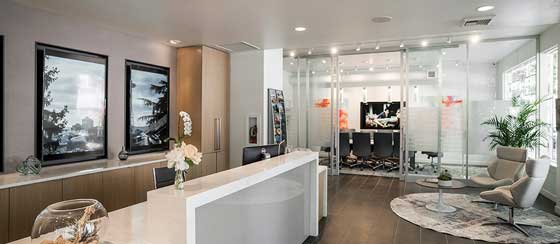
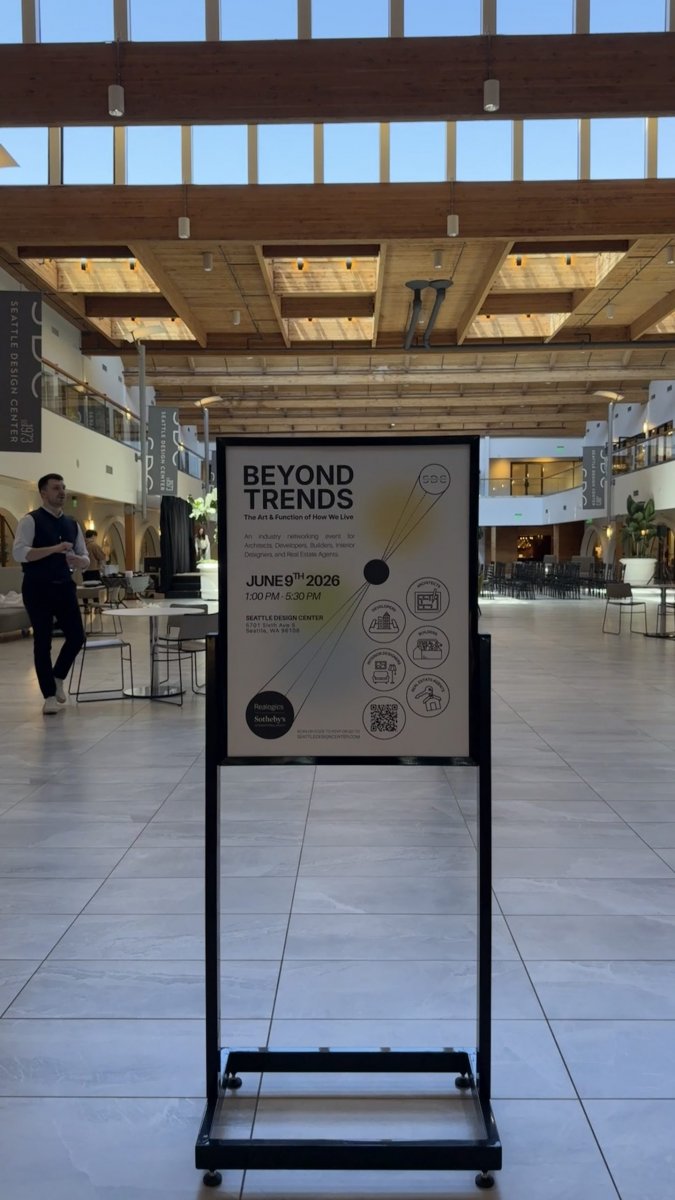
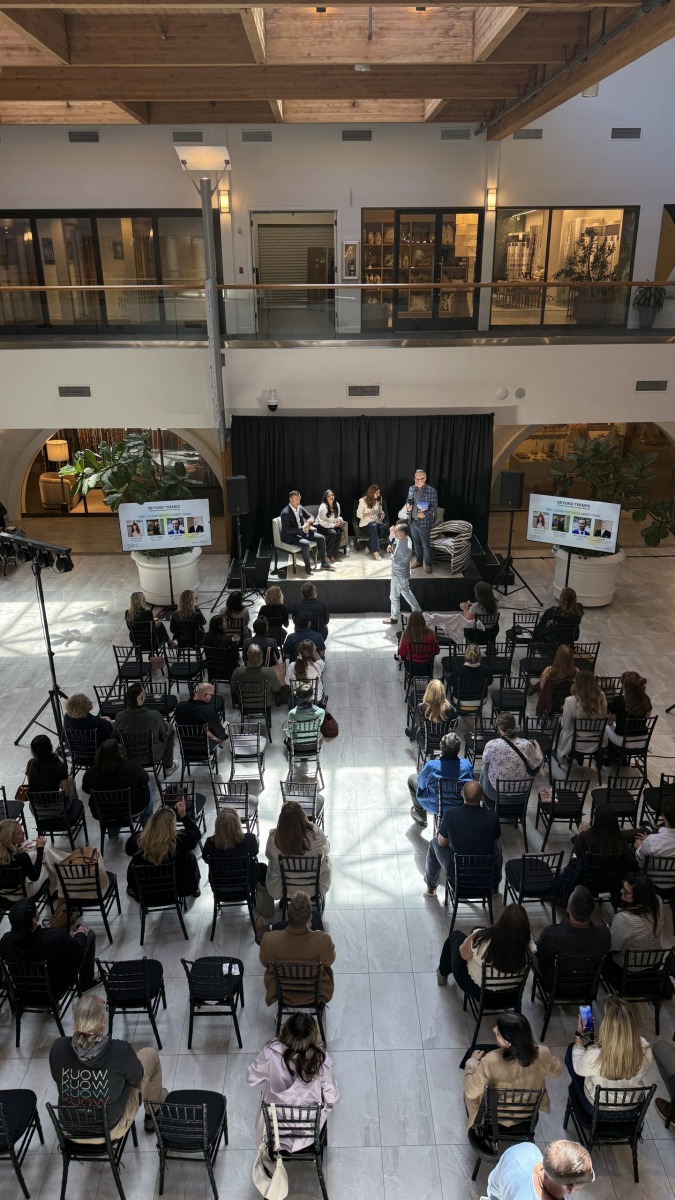
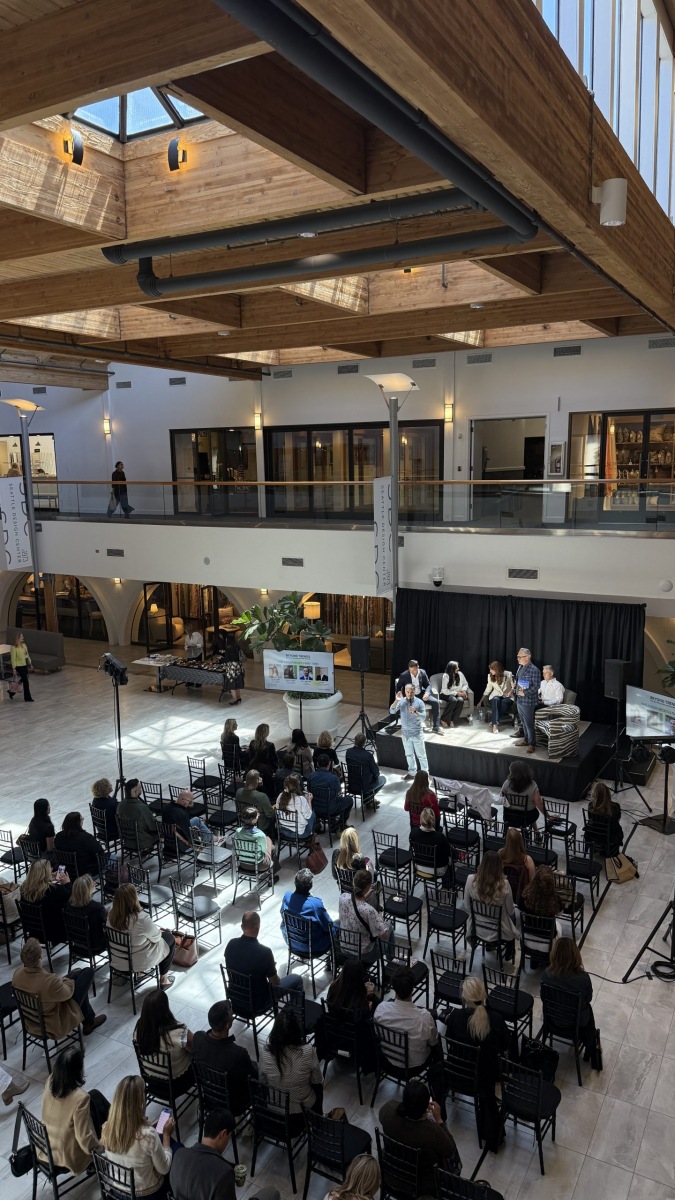
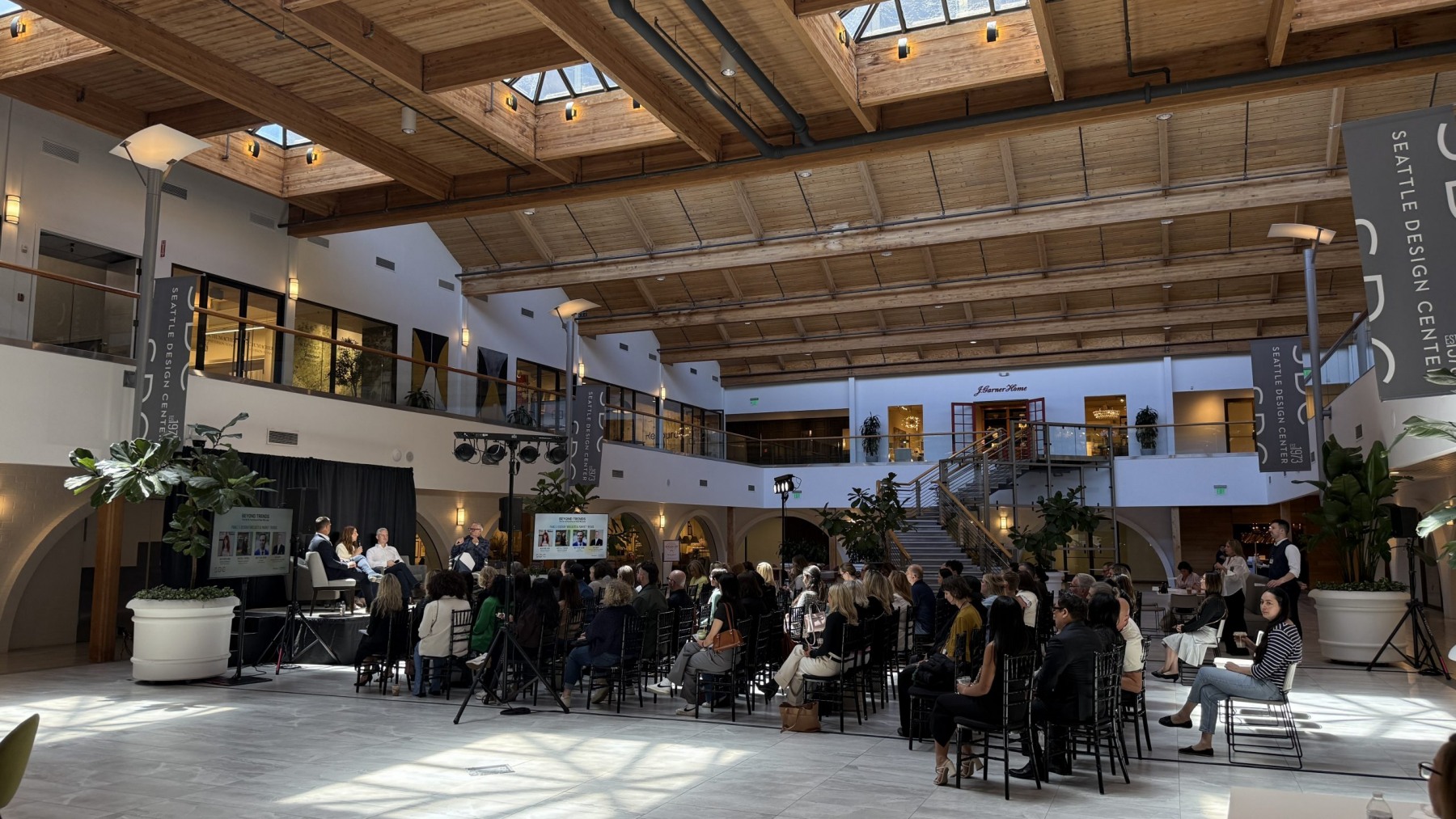
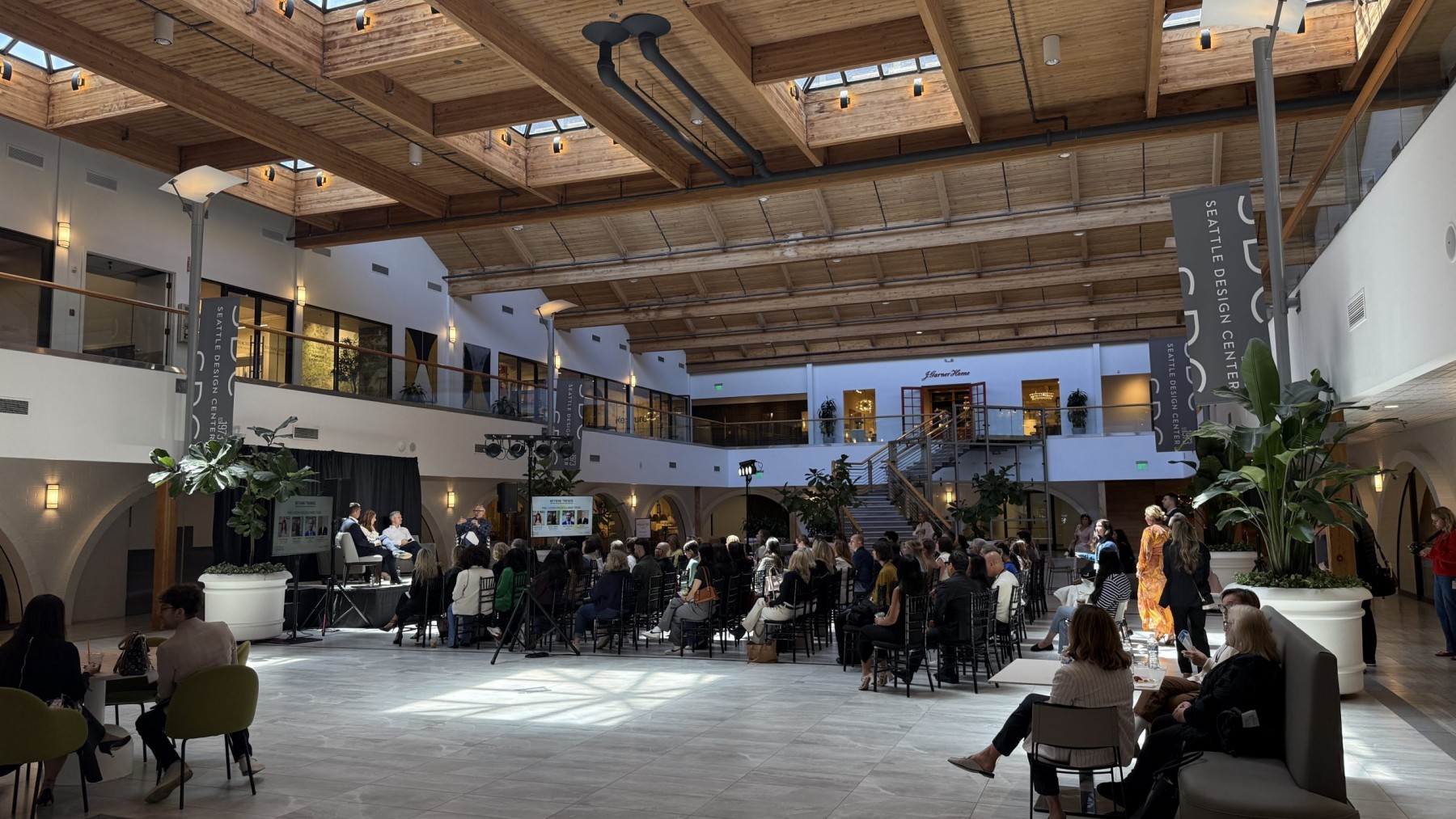
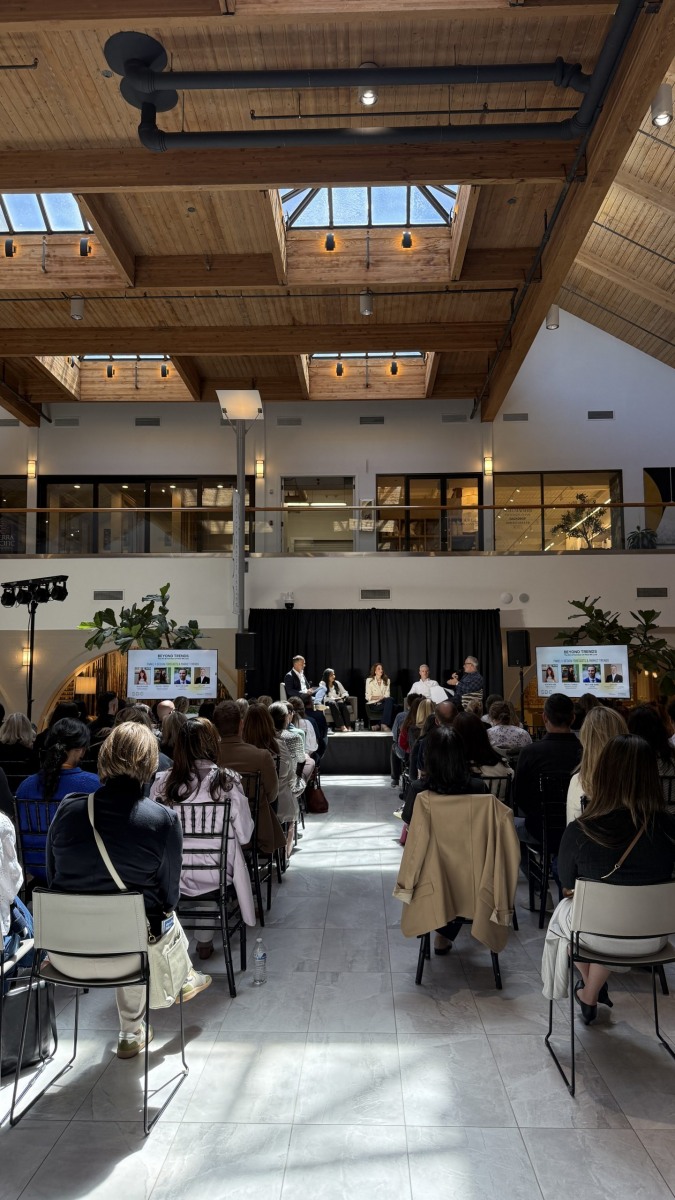
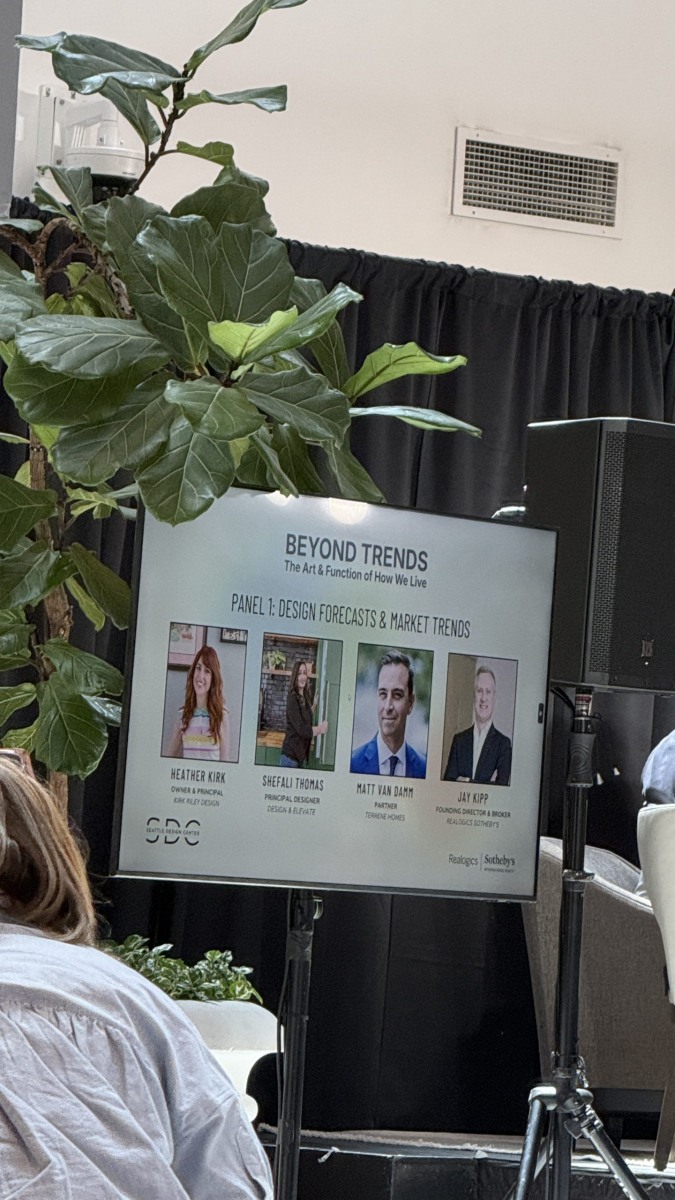
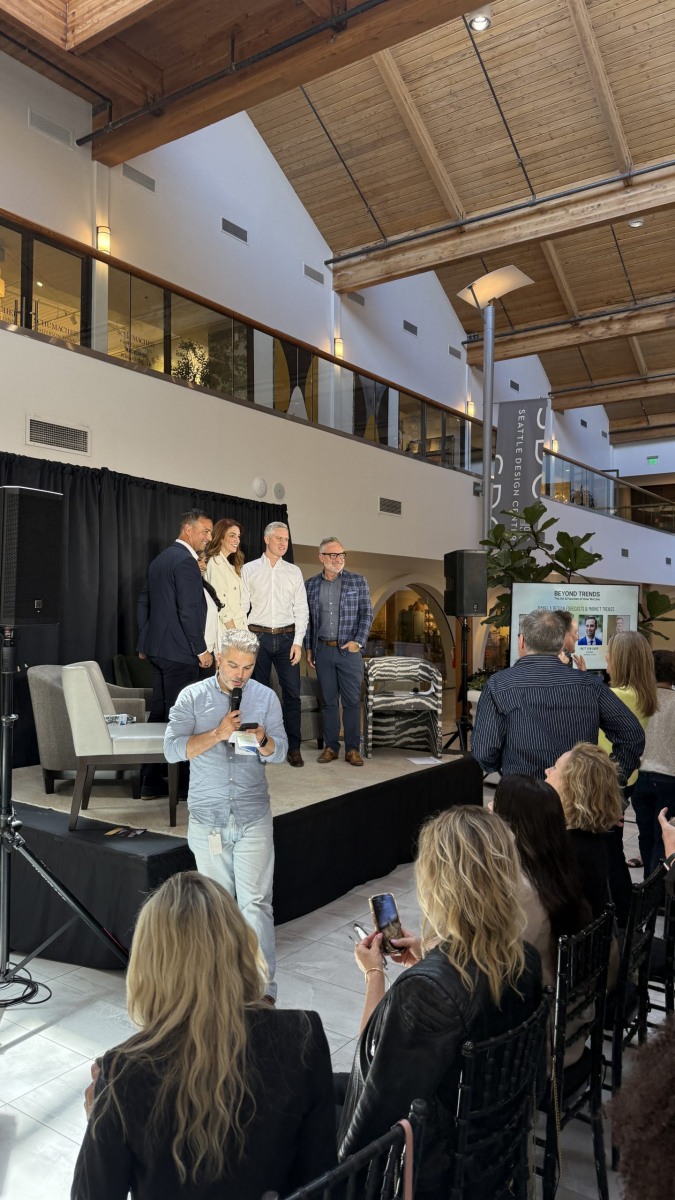
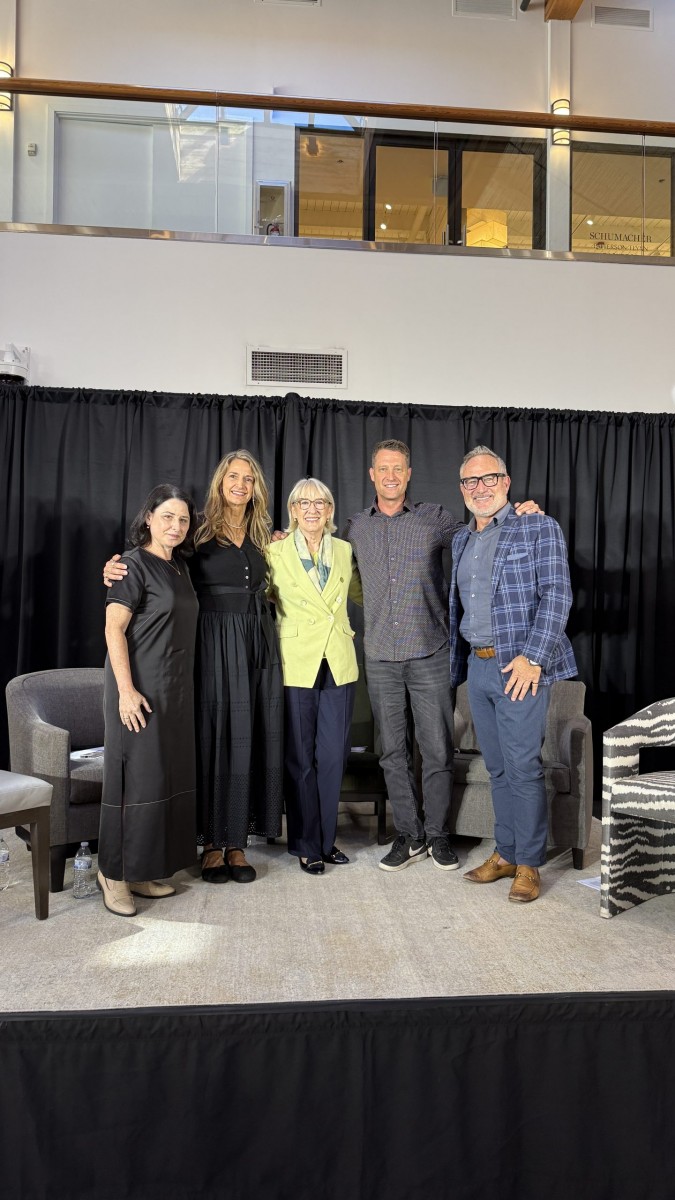
On June 9, 2026, Realogics Sotheby’s International Realty and Seattle Design Center welcomed industry leaders, designers, builders, developers, and real estate professionals to the Seattle Design Center for “Beyond Trends: The Art & Function of How We Live.” This timely panel discussion began with design but quickly moved into something larger.
The core question: How do we lead clients through uncertainty when housing, economics, technology, and demographics are all changing at the same time?
What unfolded was a conversation about interiors, aesthetics, and trends, but also a broader exploration of consumer psychology, confidence, and adaptation in a disrupted market. Speakers on two panels unpacked the “perfect storm” of headwinds shaping real estate, development and design during the past several years: elevated mortgage rates, shifting buyer behavior, inflationary pressure, AI acceleration, evolving demographics, and the lingering aftereffects of the post-COVID boom.
The event served as a strategic industry reset, recognizing that we are no longer operating in a traditional trend cycle but in a confidence cycle.




From Trends to Truth
The past five years have reshaped the way people think about home.
During the pandemic, homes became everything at once: office, classroom, gym, and sanctuary. Remodeling and renovation activity surged as homeowners adapted their spaces to meet new demands. But as the market moved beyond that extraordinary period, the panelists acknowledged a shared reality: the COVID-era “sugar rush” is no longer driving consumer behavior.
The remodeling market didn’t disappear—it came off an unsustainably high COVID-era peak. Consumers are still investing in homes, but they are doing so more carefully. Decisions are taking longer, budgets are being scrutinized, and projects are being phased. Homeowners are asking more questions, weighing more tradeoffs, and seeking reassurance before moving forward.
The New Consumer Mindset
One of the clearest throughlines of the afternoon was the shift from aspiration to intention. Panelists described clients who are less interested in performative design and more focused on longevity, wellness, function, and emotional resonance. Instead of “What will look good?” clients are asking, “How will this space support the way I actually live?”
Jay Kipp noted a growing preference for completely finished homes, reflecting a market where buyers are applying more scrutiny than ever. In a higher-cost environment, the tolerance for uncertainty is low. Buyers want to understand a property’s long-term livability, quality, and value. Lifestyle has become an increasingly important driver, with wellness features, flexible layouts, and bonus spaces rising in significance.
Housing Turnover and the Golden Handcuffs
Higher mortgage rates have reduced mobility, and many homeowners remain locked into low-rate mortgages secured during the pandemic-era lending environment. The result is the now-familiar “golden handcuffs” effect: homeowners may want to move, but doing so could significantly increase their monthly housing costs.
That hesitation has ripple effects. When fewer people move, fewer homes turn over. When fewer homes turn over, remodeling and design activity shifts. Some homeowners choose to stay put and renovate incrementally. Others delay major decisions. Some buyers, facing limited inventory or affordability constraints, become more selective and less willing to take on projects after closing.
This creates a market where revenue may appear steady, but project volume is often down. Rising costs for labor, materials, insurance, and operations can mask the reality that fewer projects are being completed at higher average price points.
For design firms, builders, and real estate advisors, this means their business models are changing. The future may involve fewer but more complex opportunities, requiring stronger client education, more thoughtful marketing, and a deeper emphasis on trust.
Designing for Emotion, Memory, and Meaning
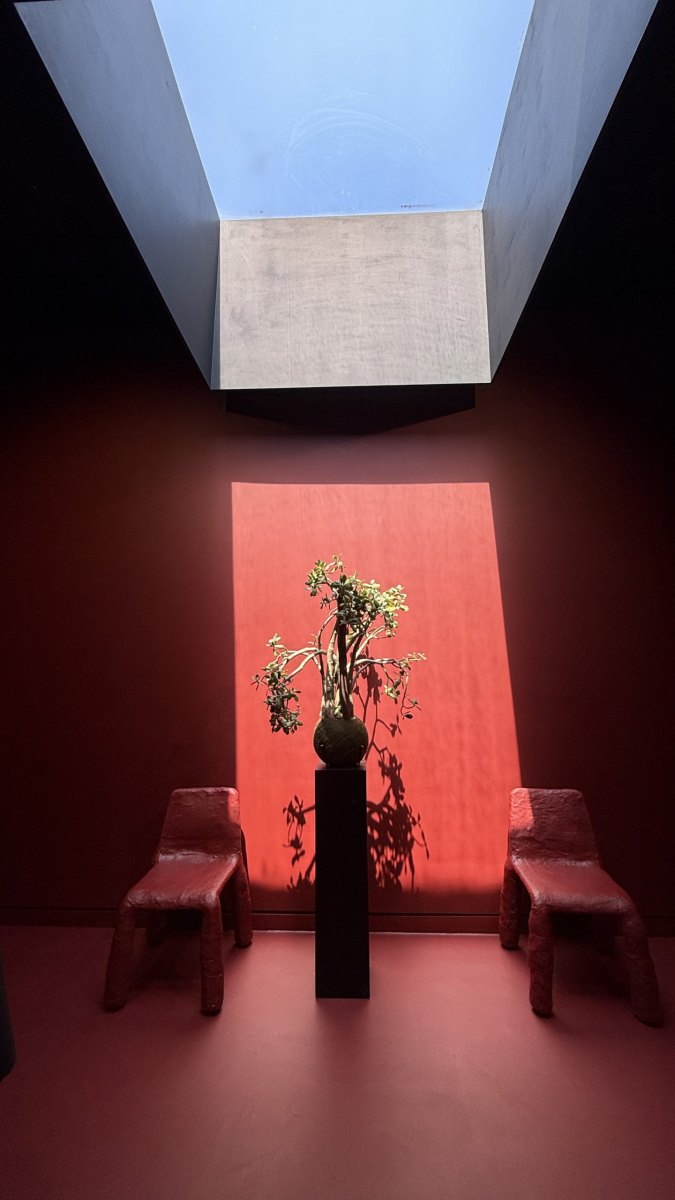
Great spaces are not only seen; they are experienced. Watching how people interact with a home, move through rooms, gather in kitchens, pause near windows, or respond to light and materiality reveals what truly matters.
Hyper-trendy design is losing ground to texture, authenticity, natural materials, and story-driven environments. The most compelling homes are not copies of a Pinterest board. They feel specific and create a sense of belonging.
In real estate, this carries significant implications. Listings that are memorable and differentiated are better positioned to resonate with buyers who are taking longer to make decisions. When consumers are cautious, emotional clarity becomes more valuable.
AI, Technology, and the Human Advantage
Technology was another recurring theme, particularly the rise of AI. Panelists acknowledged that AI could accelerate visualization, planning, and inspiration. It can help clients explore ideas quickly and reduce friction in the early stages of design. But there was broad agreement that AI cannot replace lived experience, emotional intelligence, or the nuanced understanding that comes from listening closely to a client.
In an AI-saturated environment, expertise becomes more valuable, not less. The more information consumers have access to, the more they need trusted professionals to interpret, prioritize, and guide them.
The Builder and Developer Reality
The development conversation brought another layer of complexity. Slower permit pipelines, financing challenges, labor shortages, and cost pressures are reshaping what can be built, where, and for whom. At the same time, demand is shifting toward flexibility, community, and multigenerational living.
Marianne Francis emphasized the growing importance of homes that support more connected ways of living. She spoke to the need for ADUs and DADUs, more community-centric planning, and spaces that foster human connection. Her reminder—“This is not a dress rehearsal; this is it”—landed as both a design philosophy and a call to action.
She envisioned the future of homes as “human nests”: places of shelter, warmth, adaptability, and connection. In a culture shaped by screen fatigue and social fragmentation, the home is being asked to support more people, more time, more intergenerational living, and more meaningful proximity.
The Confidence Economy
The strongest takeaway from the afternoon was shared across disciplines: the industry is no longer simply selling homes, design, or development. It is selling confidence.
Clients are navigating a complicated landscape. They are weighing interest rates, construction costs, resale considerations, lifestyle needs, family changes, technology, and economic uncertainty all at once.
That places a greater responsibility on professionals. The most valuable advisors today are those who can reduce uncertainty, translate complexity, and help clients understand what matters now, what will endure, and where to move with confidence. They combine data with empathy, expertise with patience, and vision with practical guidance.
Looking Ahead
Beyond Trends offered a moment of clarity in a market that has often felt noisy, cautious, and difficult to define.
The post-boom era is a recalibration. Remodeling spending remains historically significant. Demand for meaningful housing remains strong. The Puget Sound continues to be shaped by desirability, innovation, natural beauty, and long-term growth.
And yet, consumers are more discerning. Projects are more intentional. Homes must be more flexible. So, professionals must be more informed, more visible, and more trusted.
In a disrupted market, the future will belong to those who help people navigate the present with clarity, empathy, and confidence.